Wandering Days
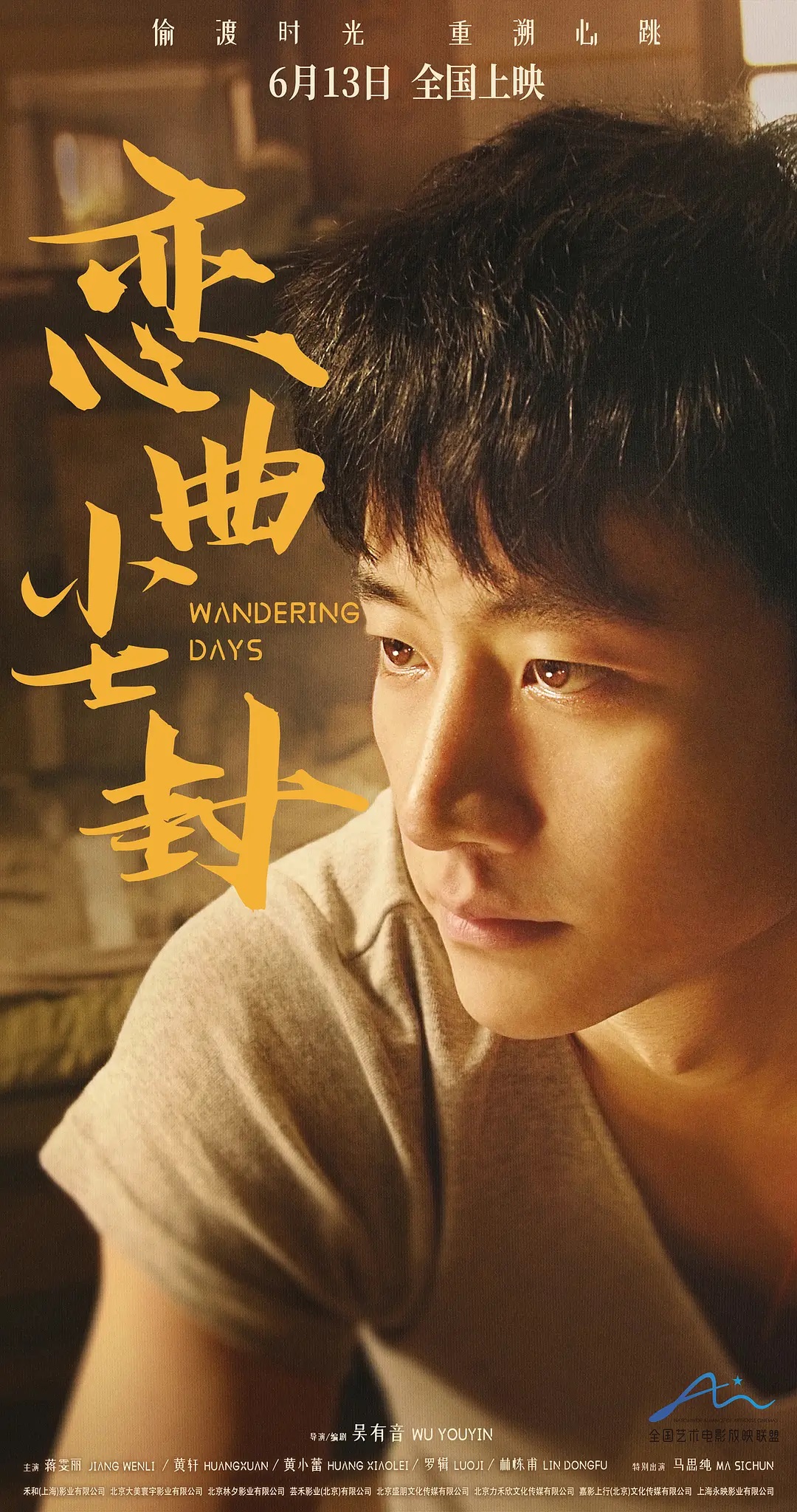
恋曲尘封
China, 2014, colour, 2.35:1, 86 mins.
Director: Wu Youyin 吴有音.
Rating: 7/10.
Long-missing movie centred on a teenage artist’s obsession with a girl from the past and her present-day self is worth watching simply for its name cast.
 STORY
STORY
Shanghai, 1993, summer. Huang Xuan (Huang Xuan), 18, and his tubby best friend Luo Ji (Luo Ji) spend their time larking around and brawling. Huang Xuan is especially frustrated, as he wants to be a profesional painter but has just failed the gaokao (university entrance exam). The less ambitious Luo Ji works flipping pancakes in a backstreet eaterie. One day the pair break into a deserted building that’s reputed to be haunted. In the flat upstairs, under the floorboards, they find a tin box and a dust-covered girl’s diary. It was begun 18 years ago, in 1975, by the then 18-year-old Lin Xuelan (Ma Sichun), whose picture is in the front. (She was then living unhappily with her aunt and uncle at the time, who could no longer afford to look after her.) Huang Xuan is fascinated by Lin Xuelan’s photo, and he starts sketching her with a pencil. He spends all his time reading her diary in the dusty, deserted flat. He later pins up a sketch of her – alongside other drawings he hopes to sell for RMB10 each – in the entrance of an art academy. There it is seen by a smart woman in her mid-30s (Jiang Wenli) who works there. With both his parents dead, Huang Xuan lives with his maternal grandfather (Lin Dongfu). One day, following an argument between them in which Huang Xuan badmouths his own father, whose memory he despises, his grandfather has a heart attack and is hospitalised. Huang Xuan is given a bill for RMB1,000 – a deposit for three months’ stay in hospital – which has to be paid immediately. Luo Ji loans him some money but it’s not nearly enough. In desperation he starts sketching outside the academy, where one day the smart woman asks him to sketch her. She asks him who the girl in the drawing is; when he lies that she’s his girlfriend, the woman gives him her card and tells him to contact her if he wants to study painting. She is Lin Xuelan. To raise the deposit money, Huang Xuan rents out his grandfather’s room in the flat to a Miss Ma, aka Maria (Huang Xiaolei), a self-possessed young singer in a private club. He starts taking lessons with Lin Xuelan at her studio, aping characteristics of the boyfriend she wrote about in her teenage diary. One day, when Huang Xuan sees Maria is upset after coming home from work, he warns her lascivious boss, Lu (Sun Peng), to stop harrassing her. When Lin Xuelan asks Huang Xuan again who the girl is in the drawing, he denies knowing her and says he drew her “in my dreams”. Lin Xuelan visits the old deserted flat she once lived in and sees it is full of Huang Xuan’s drawings of her as a teenager. She demands her diary back from him; he apologises, saying he fell in love with the girl in the diary. Thereon their relationship develops, as does a crush that Luo Ji has on Maria. Despite Huang Xuan’s attempts make his friendship with Lin Xuelan more, she tries to keep it platonic, partly because of their age difference and partly because of her memories of her onetime boyfriend.
REVIEW
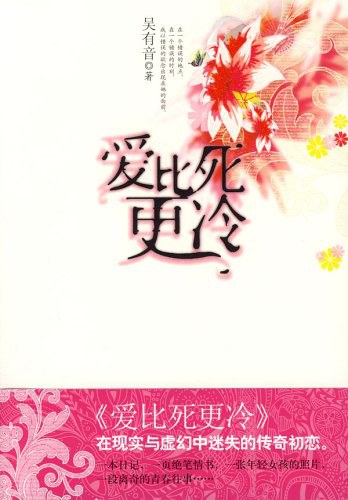 Eleven years after its festival premiere, the time-shifting love story Wandering Days 恋曲尘封 finally got a limited theatrical release in the Mainland this summer – a major accomplishment, even if it only took a tiny RMB370,000 at the box office. The first feature of Shanghai-born writer-director Wu Youyin 吴有音, then 37, it features a powerhouse cast for the time and a story that elides the past and present as a young artist falls in love with two separate women who are in fact the same. Though the film lacks a strong enough third act to capitalise fully on the emotionally rich material, it’s still a remarkable picture that hardly deserved to sit on the shelf for so long.
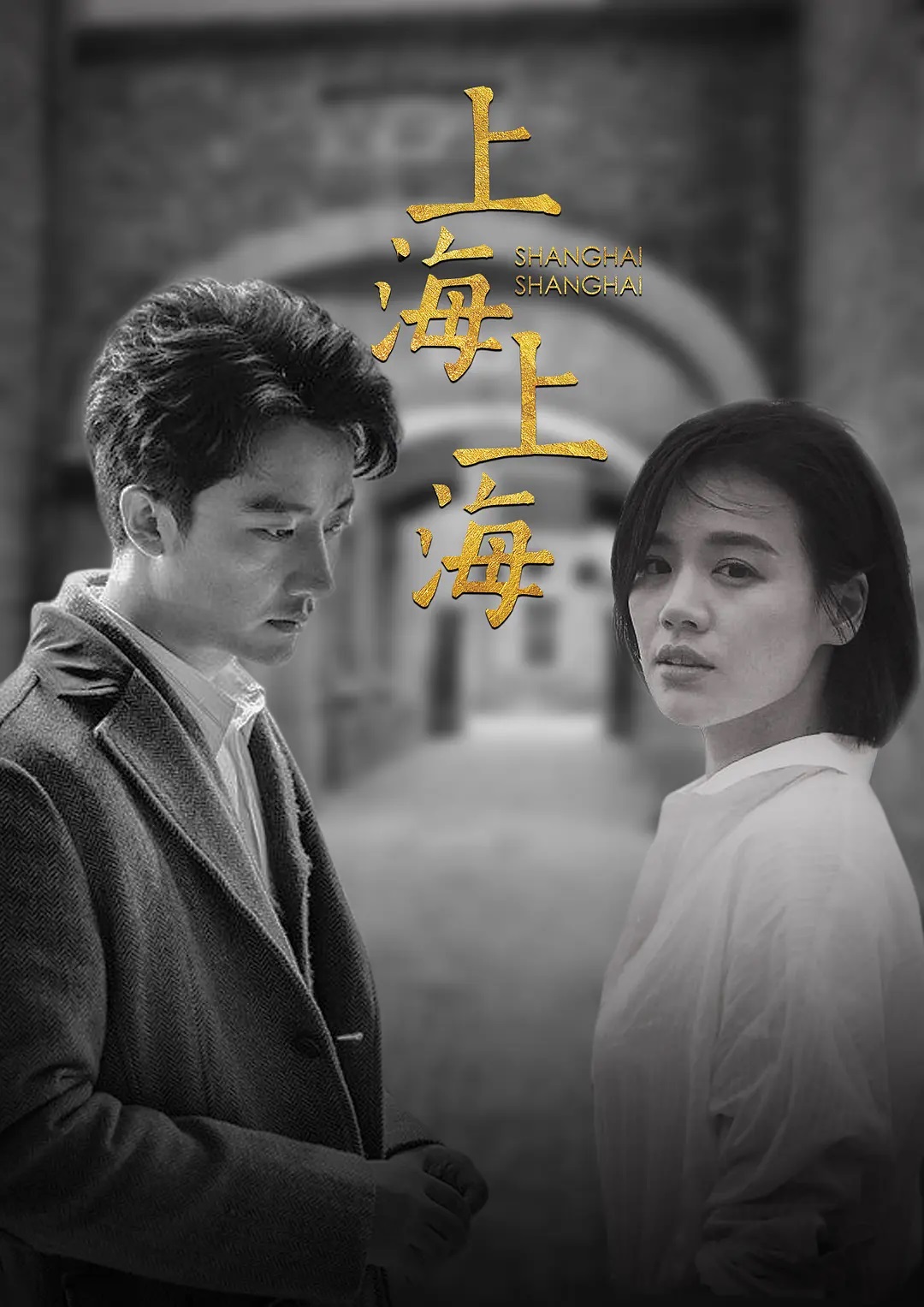
Adapted from Wu’s own 2006 novel 爱比死更冷 (literally, “Love Is Colder Than Death”, see 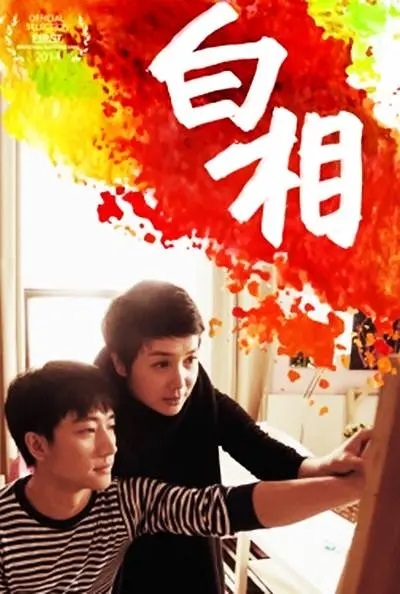 above), the film was aided by a fund for first-time directors and was shot in early 2013. After premiering in competition at the First Film Festival, in Xining, Qinghai province, in Jul 2014, under the title 白相 (see left) – a dialect expression in the Shanghai region meaning “Having Fun” or “Playing Around” – it then all but vanished for eight years, during which time it was briefly known as Shanghai Shanghai 上海上海 (see below left). After being passed for exhibition in early 2022, it was almost released that summer and then finally screened at the China Golden Rooster & Hundred Flowers Film Festival on 10 Nov 2022 under its present Chinese and English titles. It then vanished again for almost three years prior to its release in July this year.
 The film now bears a 2025 copyright date and appears to have lost about 10 minutes since its 2014 premiere – as well as the name of Guan Hu 管虎, its original creative producer 监制, whose name and title now appear nowhere in the credits. All of the film’s history suggests re-editing prior to being passed for exhibition in early 2022. In the meantime, Wu continued with his career, writing and directing the Antarctic-set romantic drama Till the End of the World 南极之恋 (2018), based on another of his novels, as well as being one of four directors on the portmanteau online CNY comedy Look Up and See Joy 抬头见喜 (2022, see poster below). He has recently been working on the costume action drama The Sand Murmurs 沙海之门, starring actors Deng Chao 邓超 and Rong Zishan 荣梓杉 and actresses Yang Zishan 杨子姗 and Huang Xiaolei 黄小蕾 (the last from Wandering
  Days).
The film is framed as a reminiscence from 2013 of events 20 years earlier, when footloose, 18-year-old artist Huang Xuan (Huang Xuan 黄轩) – who’s just failed the university entrance exam and is only good for two things, “painting and brawling” – breaks into a deserted old flat in a Shanghai back alley with his best pal Luo Ji (Luo Ji 罗辑). (Though both actors play characters with their own names, Huang’s is actually known for most of the film as Xiaochilao 小赤佬, literally “Little Red Guy”, and Luo as Jieba 结巴, literally “Stammerer”.) Under the floorboards they find a tin and a dusty diary – the film’s Chinese title means “A Dust-Covered Love Song” – written by 18-year-old Lin Xuelan (Ma Sichun马思纯) 18 years earlier, i.e. 1975, during the closing years of the Cultural Revolution. Huang Xuan becomes obsessed by her picture in the diary, as well as the story of her family problems (looked after by a fractious aunt and uncle) and her boyfriend of the time. When he meets the present-day, 36-year-old Lin Xuelan (Jiang Wenli 蒋雯丽), he’s first confused, then starts playing games, and finally falls for her, despite the 18-year age difference.
Aside from all the play with the figure 18, the film gives the impression of being very carefully constructed, slowly eliding the past and present in a subtle way as Huang Xuan partly takes on the character of the younger Lin Xuelan’s boyfriend and then has to distinguish between falling in love with a teenage girl’s picture and the living, breathing 36-year-old who’s actually an art teacher. Whether or not the original cut included more details about the teen’s love affair, as well as actual passages from her diary, the final version of the film has very little of both, with just occasional flashbacks showing the teenage Lin Xuelan larking around with her boyfriend, about whom we’re told nothing. (One surviving still from the shooting shows a scene where Huang Xuan and the teenage Lin Xuelan are actually together, presumably a dream sequence.)
Instead, the vast majority of the film is set in 1993 – as a wall calendar constantly reminds us – and concentrates on the 18-year-old Huang Xuan’s relationship with the 36-year-old Lin Xuelan. Whether or not the age difference was the reason behind the film being shelved for so long – or political sensitivities about the flashbacks to the final days of the Cultural Revolution – it still makes for some potent drama, especially in the later stages as Huang Xuan tries to make the relationship into a sexual one and Lin Xuelan resists (clearly unwillingly). At the time of shooting, the actor Huang Xuan was almost 30 and the actress Jiang Wenli in her mid-40s; both look a tad too old for their roles but just about get away with it thanks to their fine technique, especially Jiang, who was then at the height of her career and had even directed a notable feature a couple of years earlier (Lan 我们天上见, 2009). Her playing of the older Lin Xuelan – classy, composed, but with the clear hots for the young man – anchors the film, with Huang, also then on a career high, underplaying the young rebel’s character with often icy control.
The supporting characters don’t get much of a look-in, with the part of the teenage Lin Xuelan – nicely played by Jiang’s real-life niece Ma Sichun, then in her mid-20s and about to come into her own as an actress – reduced to brief flashbacks. Huang Xiaolei, hen in her early 30s and mostly known for supporting roles in TVDs, makes the most impression as self-confident bar singer Maria who rents a room at Huang Xuan’s family flat, though her later relationship with his tubby pal Luo Ji is underwritten. It’s one of several reasons why the film doesn’t quite have the emotional clout it promises in its early stages from all the intertwined emotions. With no really strong third act, the film wraps everything up quite suddenly, running a mere 80 minutes before the leisurely end titles.
Despite its dramatic weakenesses, Wandering Days is still a remarkable debut with a fine cast that’s worth watching. Widescreen photography by Song Xiaofei 宋晓飞 (noted d.p. on Guan Hu’s black village comedy Design of Death 杀生, 2012) is always stylish and beautifully composed, and well supported by a delicate, atmospheric score by Liu Hua 刘晔 (apart from the use of aggresive pop music for a sequence where Maria’s lascivious boss is beaten up). Editing by Tu Yiran 屠亦然, another quality name on the production, is always smooth. A large chunk of the dialogue is in Shanghainese.
CREDITS
Presented by Hehe (Shanghai) Pictures (CN), Beijing Bigmay Universe (CN), Beijing Linxi Film (CN). Produced by Hehe (Shanghai) Pictures (CN).
Script: Wu Youyin. Novel: Wu Youyin. Photography: Song Xiaofei. Editing: Tu Yiran. Music: Liu Ye. Art direction: Yu Baiyang. Costumes: Zhang Yongwen, Feng Jianmin. Sound: Xiao Baohua, Zhang Jia, Dong Xu.
Cast: Jiang Wenli (Lin Xuelan), Huang Xuan (Huang Xuan/Xiaochilao), Huang Xiaolei (Ma/Maria), Luo Ji (Luo Ji/Jieba), Lin Dongfu (Huang Xuan’s maternal grandfather), Ma Sichun (young Lin Xuelan), Li Shuai (young man), Sun Peng (Lu, club manager), Wang Jiali (Huang Xuan’s mother in photo), Cao Yuqing, Ji Limin, Qian Zuoguo (majiang ladies), Zhu Mingyi (hospital nurse), Bai Shan (young man in alley).
Premiere: First Film Festival (Competition), Xining, China, 22 Jul 2014.
Release: China, 13 Jun 2025.